
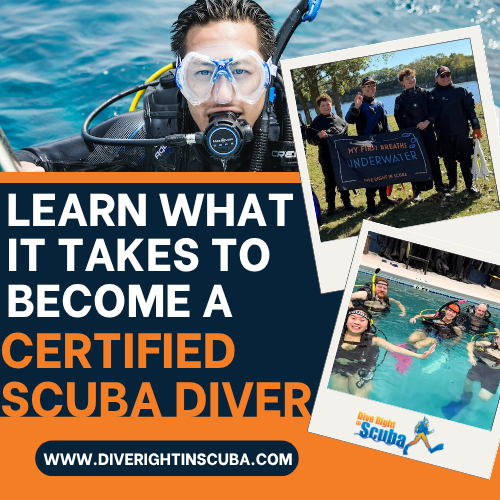
If you have ever stared out at the ocean or looked down at the deep blue and thought you wanted to go down there, you are in the right place. Getting your scuba certification is the ultimate passport to exploring the 70 percent of the planet that most humans only see on a screen.
An Open Water Scuba Diving certification is a lifetime achievement. It doesn’t expire, and it means you are trained to dive independently with a buddy, rent gear, and book dive charters anywhere in the world.
But how do you actually go from a landlubber to a certified diver? Here is your Scuba Certification 101 guide to breaking into the underwater world.
The Prerequisites
Before we throw a tank on your back, we have to make sure you meet the baseline requirements. Luckily, you do not need to be a Navy SEAL to learn to dive.
-
The Age Limit: For standard certification through agencies like SDI or PADI, you need to be at least 10 years old. Kids between 10 and 14 earn a Junior Open Water certification, which automatically upgrades to a standard certification when they hit 15.
-
The Swim Test: No, you don't need to win an Olympic gold medal. But you do need to prove you are comfortable in the water. You will have to perform a continuous swim (around 200 meters) and float or tread water for 10 minutes. If you can handle a backyard pool party, you can handle this.
-
The Health Check: You will fill out a standard medical questionnaire. If you have any pre-existing conditions like asthma or heart issues, you just need a quick sign-off from your doctor before hitting the pool.
The Three Phases of Certification
A lot of people ask if they can get scuba certified strictly online. The short answer is absolutely not. You are learning to breathe underwater using mechanical life support. You cannot learn that from a YouTube video or an app while sitting on your couch.
Instead, the process is broken down into three distinct, manageable phases.
Phase One: The Academics
This is the part you can do online. Both PADI and SDI offer fantastic eLearning platforms. You can knock out your dive theory, learn about nitrogen loading, understand how water pressure affects your body, and take your quizzes on your own schedule from home.
Phase Two: Confined Water Dives
This is where the real fun begins. You head to the pool with an instructor to get your hands on the actual gear. You will learn how to set up your equipment, clear water out of your mask, recover a regulator if it falls out of your mouth, and practice the art of hovering effortlessly like an underwater astronaut.
Phase Three: Open Water Checkout Dives
The grand finale. Once you master the pool skills, you have to demonstrate them in an open water environment. This requires four dives over two days. You can do these locally in a nearby quarry or lake, or you can take a referral link from your local dive shop and finish those final four certification dives in a warm tropical ocean on your next vacation.
The Gear You Actually Need to Buy
Don't panic about the cost of gear before your first class. You do not need to drop thousands of dollars on full life support systems right away.
During your training, a good dive shop will provide the heavy-duty equipment, including your BCD (buoyancy compensator), regulator system, dive computer, tanks, and weights.
The only things you are typically required to bring yourself are your personal fit items. This means a high-quality mask, snorkel, fins, and neoprene boots. Because everyone's face and feet are shaped differently, renting these items is a recipe for a leaky mask and blistered toes. Investing in a personal set ensures comfort and hygiene from day one.
If You Are in the Chicagoland Area
If you happen to live near Chicago and are ready to take the plunge, Dive Right In Scuba is your ultimate training destination. We have training facilities across the Chicagoland area in Plainfield, Orland Park, and Joliet.
We offer both PADI and SDI certification courses taught by some of the most experienced instructors in the country. Let us help you earn that C-card so you can step onto your next tropical dive boat with total confidence.
Stop Reading and Start Diving
The underwater world is waiting for you, and there is a class starting soon. Stop putting it off!
Ready to take your first breath underwater? Check out the upcoming Open Water course calendar at Dive Right In Scuba and sign up today.